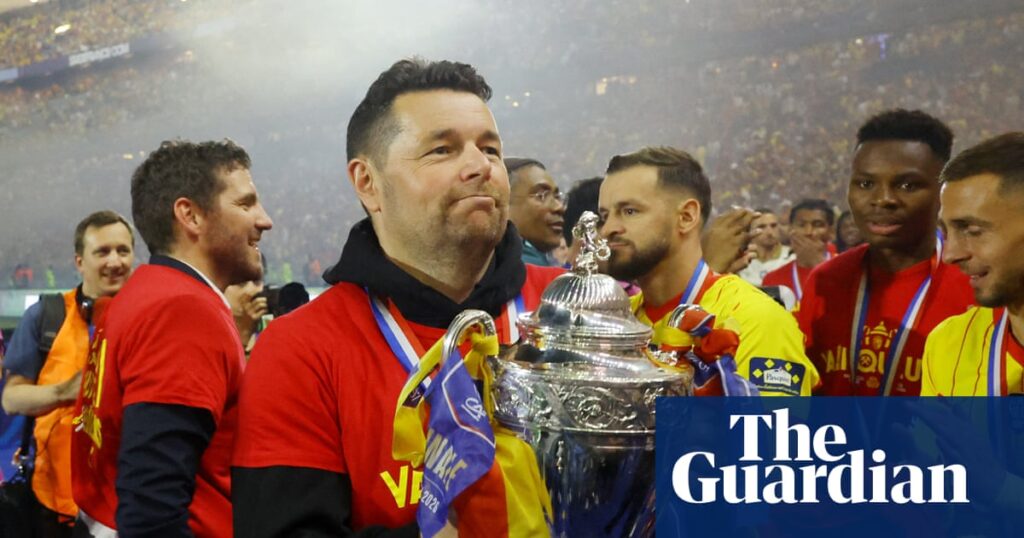
Crystal Palace are closing in on a significant appointment as Pierre Sage emerges as the frontrunner to succeed Oliver Glasner in the Selhurst Park hot seat. The 47-year-old Frenchman, who masterminded a remarkable campaign with Lens that saw them finish runners-up in Ligue 1 and lift the Coupe de France, has agreed personal terms on a two-year contract with an option for a further 12 months. Compensation details remain to be finalised with the northern French club, but sources close to the negotiations suggest this will not derail what appears an increasingly inevitable appointment. With Glasner widely expected to take charge at AC Milan after turning down advances from Feyenoord, Palace chairman Steve Parish has moved swiftly to secure a manager whose stock has risen dramatically over the past season.
Manager Profile
Pierre Sage, 47, represents one of French football’s most intriguing coaching success stories. The Frenchman initially made his name working within Lyon’s academy structure before taking the senior reins at Lens, where he transformed the Blood and Gold into genuine title contenders. His tactical approach blends positional discipline with aggressive pressing, favouring a 4-2-3-1 formation that emphasises ball retention and quick transitions. Under his guidance, Lens became renowned for their defensive solidity whilst maintaining attacking threat through wide players cutting inside to support a mobile striker. Last season’s statistics tell a compelling story: Lens conceded just 28 goals in 38 league matches whilst scoring 67, finishing second only to Paris Saint-Germain. The crowning achievement came with Coupe de France glory, cementing Sage’s reputation as a tactically astute operator capable of challenging France’s traditional powerhouses with limited resources compared to the capital giants.
Club Analysis
Crystal Palace’s pursuit of Sage reflects the club’s ambition to establish themselves firmly in the Premier League’s upper echelons. After Glasner’s tenure delivered respectable mid-table finishes, Parish and sporting director Dougie Freedman clearly believe Sage possesses the credentials to elevate the Eagles further. Palace finished 12th last season, but their underlying metrics suggested potential for improvement with better game management and defensive organisation—precisely Sage’s strengths. The South London club have invested heavily in young talent, including the likes of Michael Olise, Eberechi Eze, and Marc Guéhi, and require a coach who can develop these assets whilst implementing a coherent playing identity. Sage’s work with emerging talents at Lens, particularly his development of defensive structures without sacrificing creativity, aligns perfectly with Palace’s squad composition. With Selhurst Park undergoing redevelopment plans and the club seeking European qualification within three years, Sage represents a calculated gamble on progressive continental coaching methods that have proven effective in a comparable competitive environment.
Transfer Breakdown
The compensation package Palace will pay Lens is expected to fall in the region of £3-4 million, a modest outlay for a manager of Sage’s recent pedigree. His contract is structured as a two-year deal with a club option for an additional season, providing both parties with flexibility whilst demonstrating commitment. The likelihood of this appointment progressing stands at Advanced, with personal terms agreed and only the formality of finalising compensation remaining. Palace moved decisively after Glasner’s departure became certain, with the Austrian rejecting Feyenoord’s approach before agreeing to take charge at the San Siro. Competing interest for Sage had emerged from Bundesliga clubs monitoring the situation, but Palace’s Premier League status and project vision proved decisive. The Eagles are expected to announce the appointment within the next seven to ten days, allowing Sage to begin pre-season preparations and identify transfer targets ahead of the summer window. His backroom staff from Lens, including assistant coach Damien Della Santa, are expected to follow him to South London.
What This Means
Sage’s appointment signals Crystal Palace’s determination to evolve from perennial survivors into genuine challengers for European places—a statement of intent that reflects the club’s financial stability and strategic planning. For Palace supporters, the news generates cautious optimism mixed with inevitable curiosity about how French tactical philosophies will translate to the Premier League’s intensity. The fanbase will hope Sage can replicate the organisational excellence that made Lens so formidable whilst maximising the considerable talent at his disposal. On a broader scale, this continues the Premier League’s trend of appointing innovative coaches from continental leagues, following the successful integrations of managers like Roberto De Zerbi and Ange Postecoglou. Sage inherits a squad capable of challenging the established top-six monopoly if correctly marshalled, with particular attention on whether he can finally unlock consistent performances from Palace’s array of attacking talent. The pressure will be immediate—Palace supporters have endured false dawns before—but Sage’s credentials suggest this appointment could prove transformative. His ability to construct defensively sound teams without compromising attacking ambition may be precisely what Palace need to bridge the gap between mid-table respectability and genuine contention for silverware.