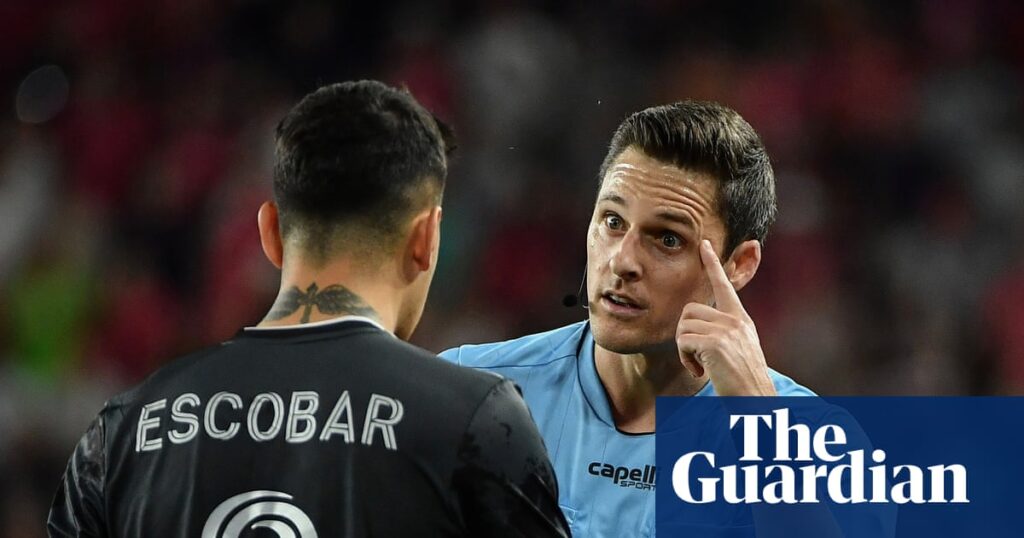
Joe Dickerson’s journey from the grassroots pitches of San Jose to the most scrutinised booth in world football represents one of the most compelling stories in officiating. Named US Soccer’s male referee of the year in 2025, the North American official will take on one of the highest-pressure roles at this summer’s World Cup – not wielding the whistle on the pitch, but making split-second decisions that could define matches from the VAR hub. It’s a role that demands forensic attention to detail, ice-cold composure, and an analytical mind that can process chaos into clarity. Dickerson, a philosopher-in-training whose intellectual rigour matches his officiating excellence, appears perfectly suited to the task.
Official Profile
Joe Dickerson represents a new breed of match official – cerebral, academically inclined, and obsessed with the granular details that separate good refereeing from excellence. Based in the San Jose area where his officiating career began, Dickerson never initially intended to pursue refereeing as more than a side income whilst playing. His coaches suggested officiating would help him understand the game’s intricate laws and develop responsibility, advice that proved prophetic. His approach combines philosophical inquiry with practical application, treating each VAR decision as a problem requiring logical deconstruction. Currently one of North America’s most respected officials, Dickerson has built his reputation on consistency, clarity of communication, and an almost academic approach to decision-making. His 2025 US Soccer male referee of the year award recognised not just his on-field performances but his mastery of VAR technology – a specialism that has become increasingly vital in modern football. His ability to remain calm under extreme pressure and communicate complex decisions clearly to on-field referees has made him an ideal candidate for World Cup VAR duties, where milliseconds matter and global scrutiny is relentless.
Role Analysis
FIFA’s selection of Dickerson for VAR duties reflects the growing importance North American officials hold in the global game, particularly following the successful implementation of technology during tournaments on the continent. The World Cup VAR operation requires officials who can process multiple camera angles simultaneously, maintain constant communication with on-field referees, and make recommendations that balance the laws of the game with the spirit of football. Dickerson’s philosophical training – his ability to break down complex problems into their constituent parts – aligns perfectly with VAR’s demands. Unlike on-field refereeing, where instinct and positioning matter enormously, VAR work rewards those who can analyse replays methodically whilst the stadium holds its breath. FIFA has invested heavily in VAR infrastructure for this tournament, with dedicated hubs featuring dozens of camera angles and semi-automated offside technology. Officials like Dickerson will work in teams, cross-checking each other’s observations and providing the on-field referee with clear, actionable information. The role carries immense responsibility – VAR decisions at World Cups become part of football folklore, debated for generations. Dickerson’s appointment suggests confidence in his temperament and technical expertise, qualities honed through years in North America’s increasingly competitive officiating environment.
Appointment Breakdown
Dickerson’s World Cup appointment as a VAR official represents the culmination of a rigorous selection process that began over 18 months ago. FIFA typically selects approximately 20-24 dedicated VAR officials for World Cup duty, chosen from hundreds of candidates worldwide through performance assessments, fitness tests, and technical evaluations. Whilst on-field referees often receive more public recognition, VAR officials undergo equally demanding preparation, including intensive training camps where they review thousands of incidents and practise communication protocols. The position carries no fee beyond standard FIFA match official compensation, but the prestige is considerable – World Cup appointment remains the pinnacle of any official’s career. Dickerson will work multiple matches throughout the tournament, potentially including knockout stages if his performances impress FIFA’s refereeing committee. The appointment is confirmed (Done Deal), with Dickerson already having completed mandatory pre-tournament training seminars. He faces no competition for his specific VAR role, though he’ll be part of a rotating pool of video officials assigned to different matches. The selection of North American officials has increased significantly since the continent hosted the 1994 World Cup, reflecting improved refereeing standards and infrastructure investment across the region.
What This Means
Dickerson’s World Cup appointment signals a broader shift in how football values match officials – not merely as rule enforcers but as specialist technicians whose expertise varies across different domains. The fact that a philosophically-minded official who prioritises analytical thinking has earned this role suggests FIFA recognises that VAR demands a different skillset than traditional refereeing. For North American football, it represents continued validation of the region’s officiating development programmes, particularly important as the continent prepares to co-host the 2026 World Cup. The increasing sophistication of VAR technology means officials like Dickerson become crucial interpreters, translating pixels and freeze-frames into decisions that respect football’s fluidity. His presence in the VAR booth may lack the visibility of centre referees, but his influence could prove equally decisive. One contentious offside call or penalty recommendation could define a team’s tournament. For aspiring officials worldwide, Dickerson’s journey from recreational player to World Cup VAR official demonstrates that alternative pathways exist beyond the traditional route of lower-league referee to elite on-field official. His philosophical approach – treating refereeing as an intellectual discipline requiring constant study and reflection – may well represent the future of officiating in an era where technology and human judgement must work in concert. The World Cup will test whether his methodical, detail-obsessed style can withstand football’s most intense pressure cooker.