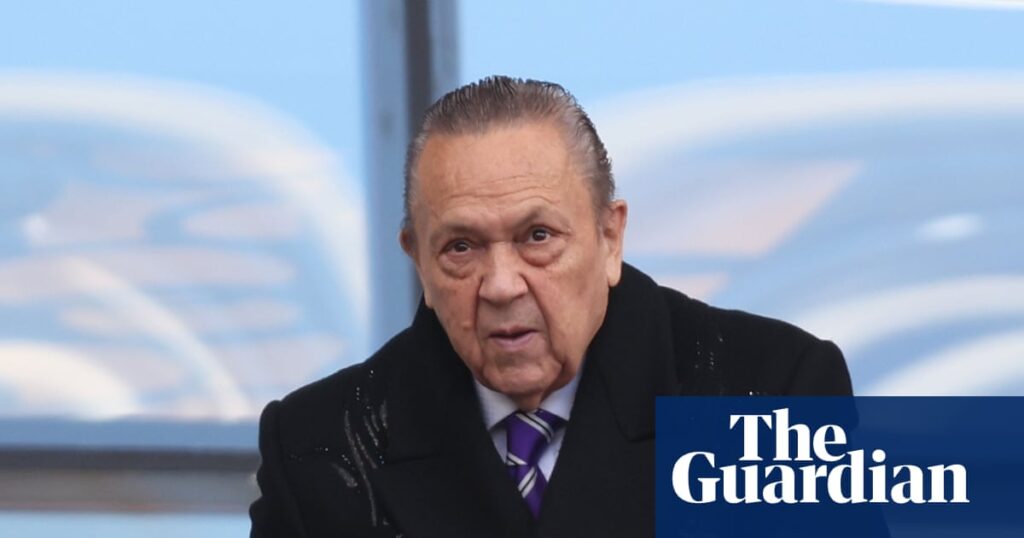
In a dramatic turn of events that has sent shockwaves through the London Stadium, David Sullivan has resigned with immediate effect from his positions as joint-chairman and director of West Ham United. The 75-year-old businessman announced his departure on Saturday via a statement published on the club’s official website, citing his intention to fight what he describes as “factually incorrect and entirely false, decades-old allegations” about his personal life. Sullivan, who has been a polarizing figure during his 14-year tenure in east London, insists he is “absolutely not the person the media has decided to paint me as” and will step away to tackle these claims head-on whilst protecting the club from unwanted distraction.
Sullivan’s West Ham Legacy
David Sullivan acquired West Ham United alongside David Gold in January 2010, purchasing a majority stake for approximately £105 million when the club was in severe financial difficulties. The Birmingham-born entrepreneur, now 75, has overseen a transformative period for the Hammers that included their controversial move from the Boleyn Ground to the London Stadium in 2016. Under his stewardship, West Ham won the UEFA Europa Conference League in 2023 – their first major European trophy since 1965 – and secured consecutive European qualifications. However, his tenure has been marked by frequent supporter protests, with many fans criticizing his transfer strategy, communication style, and perceived lack of ambition. Sullivan maintained a hands-on approach to transfers, often personally negotiating deals and publicly commenting on the club’s business, which endeared him to some whilst alienating others who felt he undermined successive managers.
Current Club Situation
Sullivan’s departure comes at an extraordinarily precarious moment for West Ham United, with the club battling relegation in what has been a catastrophic Premier League campaign. The Hammers currently sit in the bottom three, a remarkable fall from grace for a side that finished sixth and qualified for Europe just two seasons ago. The appointment of Graham Potter has failed to stem the tide, with the club winning just one of their last eight league fixtures. Sullivan’s exit creates a significant power vacuum at boardroom level, with questions now arising about who will drive crucial decisions regarding January reinforcements, managerial backing, and the club’s strategic direction during this survival fight. His co-owner David Gold passed away in 2023, leaving Czech billionaire Daniel Křetínský, who acquired a 27% stake in the club with an option to purchase Sullivan’s remaining shares, as the likely figure to assume greater control. The timing could hardly be worse, with West Ham needing clarity and decisive leadership to navigate their way out of the relegation mire.
Resignation Details
Sullivan’s resignation has been announced as immediate and unconditional, with the businessman stepping down from all official positions at West Ham United including his roles as joint-chairman and director. The statement, published “for the benefit of transparency” according to Sullivan’s legal representatives, makes clear that this decision is directly connected to forthcoming media reports concerning his private life, which he vehemently denies. There has been no indication of a financial settlement or ongoing consultancy role, suggesting a clean break from day-to-day operations. Daniel Křetínský, who has been progressively increasing his investment in the club since 2021 through his Venndale vehicle, is expected to assume Sullivan’s responsibilities, potentially accelerating his planned full takeover. The Football Association and Premier League will need to process the changes to the club’s ownership structure, though this is typically a formality for resignations rather than new acquisitions. West Ham have not yet announced interim governance arrangements or commented on how football operations will be managed during this transition period.
What This Means
Sullivan’s sudden exit marks the end of an era at West Ham United and could paradoxically provide the reset many supporters have been demanding for years, albeit in circumstances nobody anticipated. Fan reaction has been predictably mixed – whilst many have celebrated the departure of a figure they blame for years of mismanagement and broken promises, others recognize the destabilizing impact this will have during a relegation battle. The timing raises serious questions about the club’s ability to function effectively in the transfer market, with just weeks remaining in the January window and desperate need for reinforcements. For the Premier League, this represents another governance challenge at a major club, following recent ownership upheaval at Chelsea, Manchester United, and Everton. Křetínský, a relatively low-profile owner who also holds stakes in Sparta Prague and has interests across European football, will now be thrust into the spotlight far earlier than anticipated. His approach to crisis management, transfer backing, and communication with supporters will define not only West Ham’s immediate survival prospects but the club’s long-term trajectory. The football world will be watching closely to see whether new leadership can galvanize a club in freefall or whether Sullivan’s departure proves the precursor to West Ham’s first relegation since 2011.