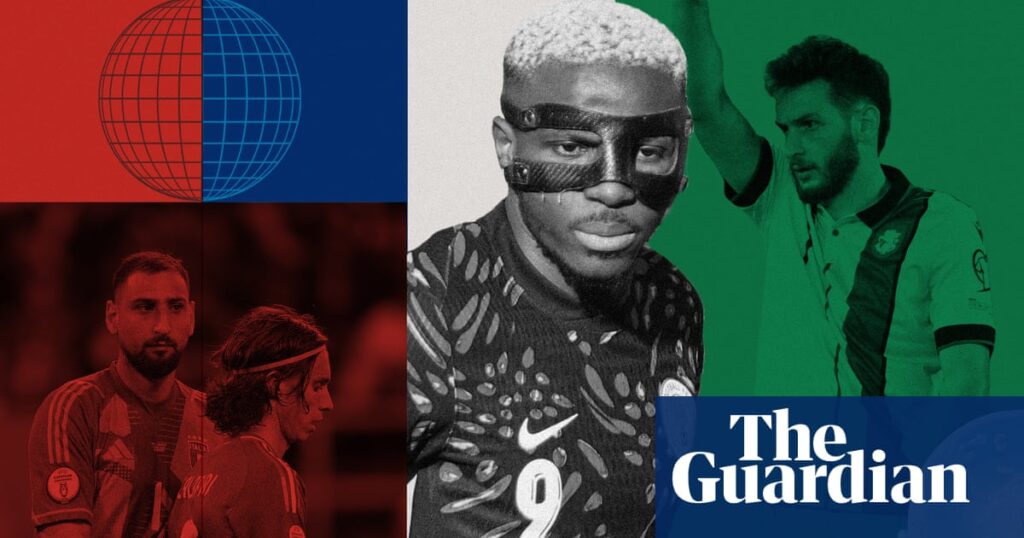
The World Cup’s absence of traditional powerhouses has left some of the planet’s finest talent watching from the sidelines this summer. From penalty-saving heroes to electric wingers who’ve set Europe’s top leagues alight, we’ve assembled an all-star XI of players denied football’s greatest stage—a sobering reminder that qualification can be cruelly unforgiving. With a maximum of two players per country represented, this dream team showcases the extraordinary depth of talent that won’t grace the tournament, featuring names that would walk into most competing nations’ starting lineups.
Player Profile
Gianluigi Donnarumma (Italy, Goalkeeper, 27) – The towering Italian shot-stopper stands as one of world football’s elite goalkeepers, combining exceptional reflexes with the modern ball-playing abilities demanded at the highest level. Since his high-profile switch to Manchester City, Donnarumma has seamlessly transitioned to the Premier League’s intensity, building on the distribution skills he refined during his Paris Saint-Germain tenure. His penalty-saving prowess became the stuff of legend at Euro 2020, yet that heroism couldn’t prevent Italy’s World Cup heartbreak when he failed to stop any spot-kicks against Bosnia and Herzegovina in their decisive playoff clash.
Khvicha Kvaratskhelia (Georgia, Left Winger, 23) – The explosive Georgian has emerged as Serie A’s most devastating wide threat, terrorising full-backs with his direct running, close control, and clinical finishing. His ability to drift inside from the left flank and create goalscoring opportunities from nothing has drawn comparisons to some of Europe’s elite attackers.
Club Analysis
These absent nations represent a seismic shift in international football’s landscape. Italy’s failure to qualify for a second consecutive World Cup remains the most shocking omission—a four-time champion and reigning European champion undone by play-off heartbreak. The Azzurri’s elimination exposed deeper structural issues within Italian football, from an ageing domestic league to diminished youth development pipelines that once produced conveyor belts of world-class talent.
Georgia’s absence, whilst less surprising given their traditional underdog status, denies global audiences the chance to witness Kvaratskhelia’s remarkable talents on football’s grandest platform. The Caucasian nation has produced sporadic individual brilliance but lacks the collective depth to navigate increasingly competitive qualifying campaigns. Norway, another notable absentee, continues its decades-long World Cup drought despite possessing generational talents, highlighting how individual quality cannot always overcome tactical or collective deficiencies at international level.
Transfer Breakdown
Whilst this isn’t a traditional transfer story, the market implications of World Cup absence cannot be understated. Players missing the tournament face reduced global exposure, potentially impacting their commercial value and transfer valuations. Conversely, an extended summer break allows these stars crucial rest and pre-season preparation time that World Cup participants sacrifice.
Donnarumma’s Manchester City contract runs through 2028, with his market value estimated around £75-80 million despite being a goalkeeper—testament to his exceptional abilities and age profile. Kvaratskhelia, meanwhile, has seen his stock skyrocket following his Serie A exploits, with European giants reportedly monitoring his situation. His current deal situation and potential summer movements could be influenced by having a full pre-season to either settle at his current club or integrate with a new team.
The absence of World Cup commitments means clubs pursuing these players face no injury concerns from tournament football, no inflated post-World Cup pricing following breakout performances, and the advantage of securing deals early in the transfer window with fully-rested players ready for pre-season.
What This Means
The broader implications of these absences reshape international football’s established hierarchy. Italy’s consecutive failures to reach the World Cup would have seemed unthinkable a decade ago, yet they reflect the increased competitiveness of European qualifying and the cyclical nature of international success. The Azzurri’s absence robs the tournament of history, tradition, and one of football’s most passionate supporter bases.
For fans of these nations, the summer represents crushing disappointment tempered only by the knowledge their stars will return fresher for the upcoming domestic campaign. Italian supporters, still processing their Euro 2020 triumph, face the sobering reality that their golden generation failed to capitalise on continental glory. Social media has been awash with lamentations from the Azzurri faithful, many pointing to systemic issues requiring urgent address before the next qualifying cycle.
From a Premier League perspective, the extended rest period for players like Donnarumma could prove advantageous, with Manchester City potentially benefiting from a goalkeeper hitting peak sharpness in August rather than carrying World Cup fatigue into the season. Across Europe’s top leagues, clubs employing these absent stars may quietly welcome the competitive edge gained through superior pre-season preparation.
This star-studded XI of World Cup absentees serves as both a celebration of extraordinary talent and a sobering reminder that international football’s landscape is shifting. Traditional powerhouses can no longer assume qualification by right, whilst individual brilliance increasingly proves insufficient without collective cohesion. As the tournament unfolds without them, these players will watch knowing they possess the quality to compete at the highest level—they simply lacked the fortune, timing, or supporting cast to get there.