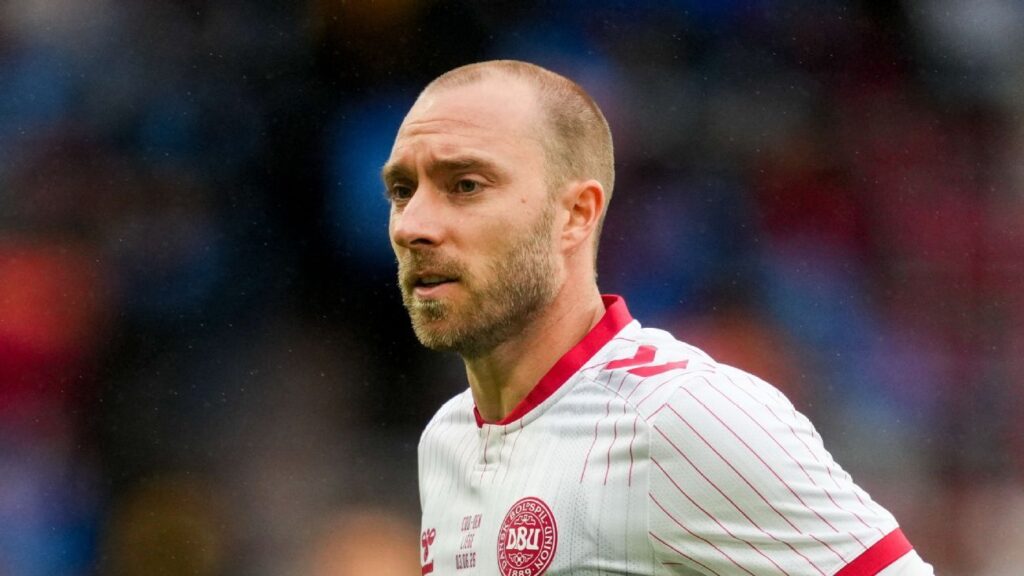
In what will come as an enormous relief to the global football community, Christian Eriksen has delivered his first public message since his terrifying on-field cardiac arrest during Denmark’s Euro 2020 clash, confirming he is “feeling good” and that his recovery is already underway. The 29-year-old midfielder, who collapsed in the 43rd minute of his nation’s tournament opener against Finland in Copenhagen, was discharged from hospital less than 24 hours after the incident that sent shockwaves through world football. Eriksen’s positive update, shared via the Danish Football Union, has been met with jubilation from fans, teammates, and rivals alike, as one of the game’s most cultured playmakers begins what promises to be a long journey back.
Player Profile
Christian Eriksen, aged 29 at the time of the incident, represents the epitome of Scandinavian technical excellence. The Danish international, who has earned over 100 caps for his country, operates as an attacking midfielder with a gift for unlocking defences through incisive passing and intelligent movement. Having developed his craft at Ajax Amsterdam before a transformative seven-year spell at Tottenham Hotspur, Eriksen moved to Inter Milan in January 2020, where he played a crucial role in the Nerazzurri’s first Serie A title in over a decade. His playing style is characterised by exceptional vision, dead-ball expertise, and the ability to dictate tempo from deeper positions. During his Spurs tenure, he registered 69 goals and 89 assists across 305 appearances, establishing himself as one of the Premier League’s most creative forces. At Inter, despite initial adaptation challenges, he contributed three goals and provided crucial assists during their Scudetto-winning campaign, showcasing his enduring quality at the highest level.
Club Analysis
Eriksen’s situation transcends typical transfer speculation, with his future now intrinsically linked to medical clearance rather than tactical considerations. Inter Milan, who had been expected to offload several key assets to ease financial pressures following their title triumph, now face an unprecedented scenario. The Lombardy club’s immediate priority shifted from sporting matters to supporting their player through recovery. Antonio Conte, who had departed as manager shortly before the incident, had utilised Eriksen increasingly in a deeper midfield role that suited his passing range. New manager Simone Inzaghi inherits a squad in transition, but any discussion of Eriksen’s tactical fit pales beside concerns for his wellbeing. Italian football regulations regarding cardiac conditions are notoriously stringent—more so than in other European leagues—which could complicate any return to Serie A. Inter’s ambitions to defend their championship and compete in the Champions League must now be recalibrated around this human tragedy, with the club making clear that football takes a distant second place to Eriksen’s health.
Transfer Breakdown
This is not a traditional transfer situation, rendering conventional analysis inappropriate. Eriksen’s contractual status with Inter Milan—he had two years remaining on his deal—becomes secondary to medical realities. No transfer fee, contract negotiations, or competing clubs factor into immediate considerations. Instead, the focus centres on comprehensive cardiac assessments and establishing whether professional football remains viable. The likelihood of any imminent move is categorised as ‘Indefinite’—not due to lack of interest, but because extensive medical protocols must be satisfied first. Should Italian regulations prevent his continuation in Serie A, a return to leagues with different cardiac screening requirements might theoretically be explored, though only after full medical clearance. Several high-profile players have successfully returned from serious cardiac incidents—Daley Blind and Fabrice Muamba among them—though each case remains unique. The football community has unanimously pledged support regardless of Eriksen’s ultimate decision, whether that involves returning to the pitch or prioritising long-term health.
What This Means
Eriksen’s collapse and subsequent recovery message represents a watershed moment that extends far beyond football’s tactical chalkboards. The incident has reignited conversations about cardiac screening protocols, emergency medical preparedness at stadiums, and the fine line between athletic excellence and medical vulnerability. Denmark’s team doctor, Morten Boesen, and the swift actions of Simon Kjær and medical staff are credited with saving Eriksen’s life, highlighting the critical importance of proper training and equipment availability. Fan reaction globally has been overwhelming, with supporters of rival nations uniting in concern, whilst Eriksen’s teammates have demonstrated remarkable courage in continuing the tournament, dedicating their performances to their stricken colleague. The broader implications for player welfare are significant—expect governing bodies to review cardiac protocols and emergency response procedures. For Danish football, this tournament has become about something greater than results. Eriksen’s positive prognosis offers hope, but the priority remains clear: football is just a game, and life comes first. His recovery, however long it takes, matters infinitely more than any transfer speculation or tactical consideration.