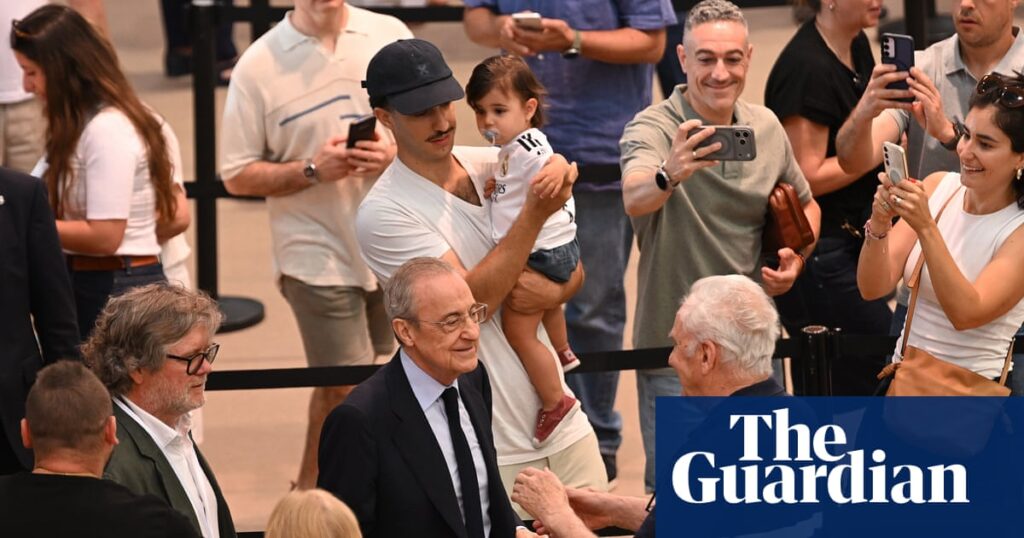
Florentino Pérez has cemented his grip on Real Madrid for another term after comprehensively defeating challenger Enrique Riquelme in the club’s first contested presidential election in two decades. The result, delayed by a legal challenge over postal votes, clears the path for Pérez to execute his ambitious vision for Los Blancos, including the controversial sale of a 5% stake in the club and the imminent appointment of José Mourinho as manager. With over 75,000 socios casting their ballots, the landslide victory represents a resounding endorsement of Pérez’s stewardship across 23 years at the Santiago Bernabéu helm, split across two transformative spells that have delivered countless trophies and cemented Madrid’s status as European royalty.
Presidential Profile
Florentino Pérez, now 78, has become synonymous with Real Madrid’s modern identity as both businessman and footballing visionary. The construction magnate first seized power in 2000, ushering in the original ‘Galácticos’ era that brought Luís Figo, Zinedine Zidane, Ronaldo, and David Beckham to the Spanish capital in a seismic shift towards superstar-driven football. After stepping down in 2006, he returned in 2009 amid financial turmoil and immediately signed Cristiano Ronaldo and Kaká for a combined €174m. His second tenure has been even more successful, delivering five Champions League titles between 2014 and 2022, including an unprecedented three consecutive European Cups. Pérez’s philosophy marries commercial acumen with sporting excellence—he’s transformed Madrid into the world’s highest-earning club whilst maintaining their on-pitch dominance. His vision extends beyond football; he was the architect of the doomed European Super League project and has overseen the €900m renovation of the Bernabéu into a state-of-the-art entertainment venue. His challenger, 37-year-old Enrique Riquelme, represented a generational alternative but ultimately couldn’t overcome Pérez’s formidable legacy and institutional support.
Club Analysis
Real Madrid currently sit as reigning European champions and La Liga holders, though the club finds itself at a pivotal juncture. Pérez’s re-election ensures continuity in a carefully orchestrated transition plan. The proposed 5% stake sale—likely to a private equity firm or sovereign wealth fund—would inject significant capital whilst maintaining member control, a model Pérez has long studied from European competitors. Tactically, the anticipated arrival of José Mourinho represents a calculated gamble; the Portuguese tactician previously managed Madrid between 2010 and 2013, winning La Liga, the Copa del Rey, and establishing them as a genuine force against Pep Guardiola’s Barcelona. His pragmatic, defensively solid approach contrasts with the more expansive football Carlo Ancelotti favoured, but Pérez clearly believes Mourinho’s winning mentality and ability to handle superstar egos makes him the ideal candidate to integrate a new ‘galáctico’ signing. The club’s ambitions remain stratospheric—nothing less than Champions League and domestic dominance will suffice, with Pérez determined to maintain Madrid’s position as football’s most prestigious institution whilst navigating the complex financial landscape of modern football.
Transfer Breakdown
Pérez’s victory unlocks several major moves. José Mourinho’s appointment will cost Madrid €15m to release him from Benfica, where he recently began his tenure, with a formal announcement expected Monday. The Portuguese coach is understood to have agreed personal terms on a three-year contract worth approximately €12m annually. More intriguingly, Pérez has publicly committed to a minimum €150m bid for an unnamed ‘galáctico’ on Tuesday, widely believed to be Crystal Palace’s Michael Olise. The 23-year-old French winger has been one of the Premier League’s most exciting talents, though the fee seems extraordinarily high for a player with just two full top-flight seasons. Madrid are prepared to offer a six-year contract worth around €10m per season. Likelihood: Advanced for Mourinho, In Talks for the galáctico signing. Competing clubs for elite attacking talent always include Manchester City, Paris Saint-Germain, and Barcelona, though Madrid’s renewed financial firepower and prestige give them considerable leverage. Riquelme’s defeated manifesto had promised Jürgen Klopp (recently departed Liverpool) as manager with Raúl as sporting director, alongside ambitious moves for Erling Haaland and Rodri—plans now consigned to history.
What This Means
Pérez’s victory represents more than simple continuity—it’s an endorsement of Real Madrid’s traditional model in an era of increasing state ownership and private equity involvement. The 5% stake sale will be watched closely across European football as clubs seek new revenue streams without sacrificing control. For socios, there’s evident trust in Pérez’s ability to balance commercial innovation with sporting success, though some progressive fans had hoped Riquelme might bring fresh thinking to a sometimes autocratic structure. Mourinho’s return divides opinion; his first spell delivered success but ended acrimoniously, and his recent managerial record has been mixed. Yet his appointment signals Pérez’s preference for proven winners over fashionable coaches. The promised galáctico signing continues Madrid’s tradition of statement summer acquisitions, maintaining their gravitational pull on global talent despite Financial Fair Play constraints affecting rivals. For La Liga, a strengthened Madrid under Pérez and Mourinho intensifies the arms race with a resurgent Barcelona under new financial models. Across Europe, this reaffirms Madrid’s status as football’s ultimate destination club—where presidential elections generate headlines, managerial appointments cost eight figures, and ambition knows no ceiling. The Pérez era, already the longest and most successful in Madrid’s storied history, shows no signs of concluding.