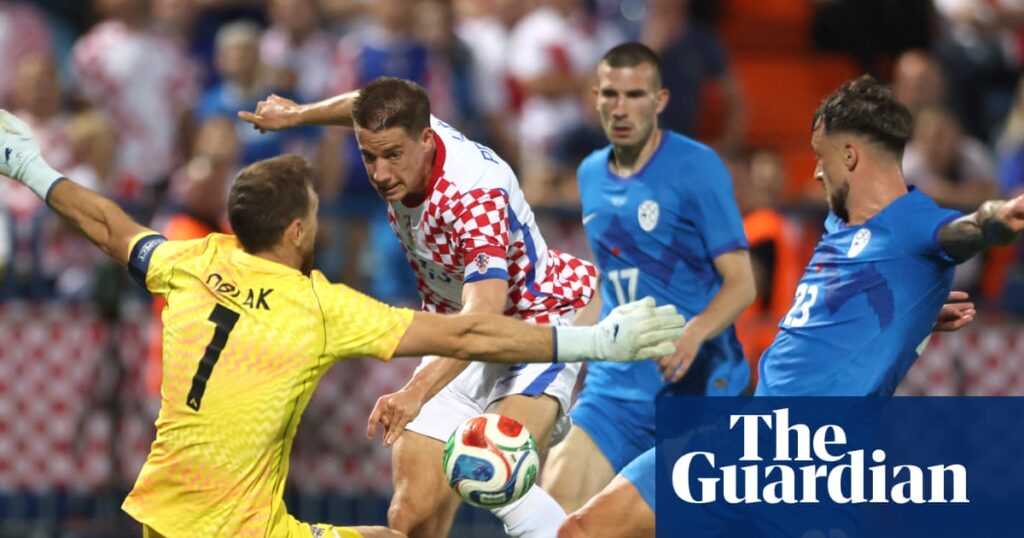
Luka Modric may be approaching 39, but the Croatian maestro proved he remains a force to be reckoned with as his side scraped past Slovenia 2-1 in what could prove to be his final appearance on home soil. In a warm, emotionally-charged evening in Osijek, the Real Madrid legend discarded his protective mask, delivered another masterclass in midfield control, and departed to a standing ovation that suggested an entire nation knows it may be witnessing the twilight of a golden era. With England looming on the horizon at the upcoming World Cup, Garlic Dalic’s side will take heart from Mario Pasalic’s spectacular late winner, even if the performance exposed lingering vulnerabilities that threaten to derail their campaign.
Player Profile
Luka Modric, at 38 years old, defies every conventional wisdom about athletic decline. The Croatian captain and attacking midfielder has amassed 178 caps for his country since his debut in 2006, captaining them to the 2018 World Cup final and winning the Ballon d’Or that same year. Standing at just 5’8″, Modric’s slight frame belies a technical brilliance and tactical intelligence that has made him one of the greatest midfielders of his generation. His style remains unchanged: perpetual motion, metronomic passing, an uncanny ability to dictate tempo, and those trademark outside-of-the-boot passes that unpick even the most organised defences. At Real Madrid, where he’s spent 12 trophy-laden years, he’s won six Champions League titles and continues to feature regularly despite his advancing years. Even wearing a protective mask following a recent knock, Modric orchestrated play for nearly an hour against Slovenia, completing 47 of 51 passes and creating two clear chances before being substituted to rapturous applause.
Club Analysis
Croatia arrive at this World Cup with expectations tempered by reality. Ranked amongst Europe’s elite after their 2018 heroics and another semi-final appearance at Euro 2020, Zlatko Dalic’s side nonetheless face a transitional phase. The core of that golden generation—Modric, Ivan Perisic, Mateo Kovacic—are all in the autumn of their careers, and younger talents like Josko Gvardiol and Martin Baturina are still finding their feet at international level. Tactically, Dalic favours a 4-3-3 formation that morphs into a 4-2-3-1, with Modric operating as the deepest midfielder, pulling strings and recycling possession. The Slovenia friendly exposed defensive fragility, particularly down the flanks, whilst the attack looked disjointed until Pasalic’s thunderous late volley salvaged victory. Croatia’s ambitions remain lofty—they harbour genuine hopes of reaching at least the quarter-finals—but questions about squad depth, defensive solidity, and whether Modric can summon one more tournament-defining performance linger as they board the plane to the United States.
Transfer Breakdown
This story concerns not a transfer but a potential international retirement, though Modric’s club future also remains uncertain. His Real Madrid contract expires in summer 2025, with speculation mounting that he may finally depart the Bernabeu after over a decade of service. Saudi Arabian clubs have circled, reportedly offering contracts worth £35-40 million annually, whilst MLS franchises including Inter Miami have expressed interest. However, Modric has remained coy about his intentions, focusing solely on what may be his final World Cup. Likelihood: Undecided. The Croatian Football Federation are desperate for him to continue through to Euro 2026 qualifying, but at 39, every tournament could genuinely be his last. There are no competing “clubs” in the traditional sense, but rather competing legacies—does he bow out at the peak, or risk diminishing returns? Croatian fans, judging by the ovation in Osijek, would support whatever decision their greatest-ever player makes.
What This Means
Modric’s potential international farewell represents the closing of a chapter that transformed Croatian football. Since emerging from Dinamo Zagreb in the mid-2000s, he’s elevated a nation of just four million people to consistent contenders on the world stage. His presence in the upcoming World Cup group—which includes England, their opening opponents—adds a layer of intrigue. England’s young midfield of Jude Bellingham, Declan Rice, and Kobbie Mainoo will be tested by a master who’s seen everything the game can throw at him. Fan reaction in Croatia has been predictably emotional; social media erupted with tributes following the Slovenia match, with many calling it the end of an era. For the wider football world, Modric’s continued excellence at 38 serves as both inspiration and anomaly—proof that technical brilliance and football intelligence can transcend physical decline. Should Croatia navigate their group and Modric produces another tournament to remember, it would cement his status not just as a national hero, but as one of the all-time greats. England, meanwhile, have been warned: write off Luka Modric at your peril.