Faith and football have long been intertwined in world sport, but few national teams have embraced religion as openly as the United States Men’s National Team heading into their home World Cup campaign. From Christian Pulisic’s regular Bible study sessions to Weston McKennie’s vocal professions of faith, the Stars and Stripes squad has developed a distinctive spiritual identity that sets them apart on the international stage. What began as individual expressions of belief has evolved into a collective dynamic that now defines the dressing room culture of American football’s golden generation.
Player Profile
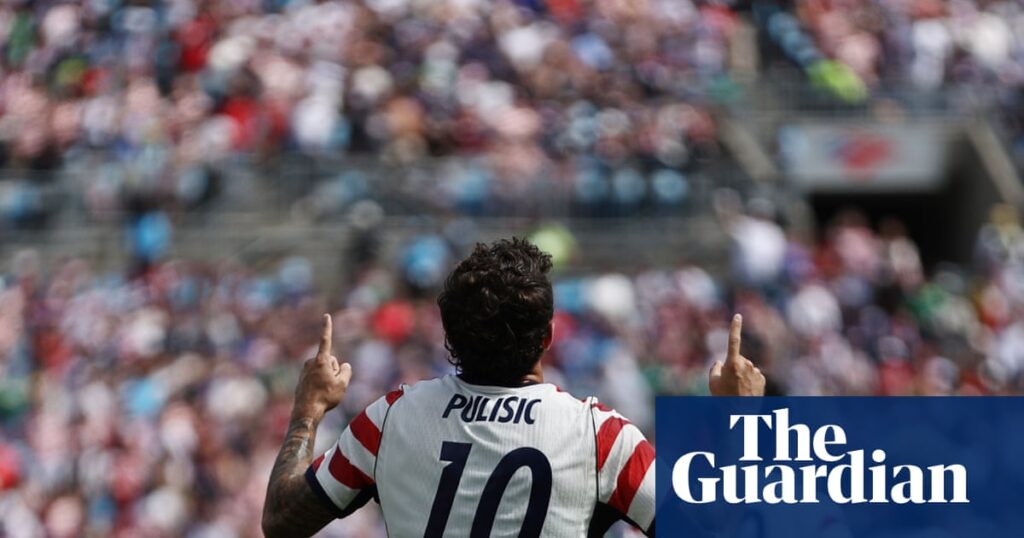
At the heart of this spiritual movement is Christian Pulisic, the 26-year-old attacking midfielder who has become not just America’s footballing talisman but also its most prominent sporting Christian. The Pennsylvania-born winger, who plies his trade at AC Milan following spells at Borussia Dortmund and Chelsea, represents the modern American footballer—technically gifted, tactically astute, and unafraid to wear his faith on his sleeve. Pulisic has registered 31 goals in 73 caps for the USMNT, establishing himself as the nation’s most prolific attacking threat. His playing style combines direct running with intelligent movement off the ball, creating space in the final third whilst maintaining a selfless approach to link-up play—qualities that mirror the team-first mentality he attributes to his Christian values.
Alongside Pulisic stands Weston McKennie, the 25-year-old Juventus midfielder whose robust box-to-box style is complemented by an equally robust faith. McKennie, who has amassed over 50 caps for his country, regularly shares scripture on social media and has spoken candidly about how prayer helps him manage the pressures of elite football. Defensive stalwarts like Walker Zimmerman and forwards such as Ricardo Pepi have similarly been outspoken, creating what insiders describe as a ‘chapel culture’ within the national team setup.
Club Analysis
The phenomenon extends beyond individual conviction to shape the very fabric of how USMNT head coach Gregg Berhalter—or his successor, depending on the timeline—manages his squad. The coaching staff have reportedly embraced rather than discouraged these expressions of faith, recognising that for many players, religious practice provides mental fortitude and team cohesion. Pre-match team gatherings occasionally include optional prayer sessions, whilst the now-famous ‘Bible time’ has become an informal tradition during international camps, where players gather for voluntary scripture reading and discussion.
This approach reflects broader American sporting culture, where Christianity plays a prominent role in locker rooms from high school through to professional leagues. However, it marks a departure from the more secular environments typically found in European club football, where many of these players spend their day-to-day careers. The USMNT’s openness about faith has generated both support from America’s substantial Christian demographic and debate about the appropriate place of religion in national team representation. As the United States prepares to host the World Cup, this spiritual identity could prove either a unifying force or a point of cultural conversation as global audiences engage with American football culture.
Transfer Breakdown
This story concerns cultural identity rather than a traditional transfer, but the ‘movement’ of religious expression into mainstream USMNT culture represents a significant shift in how the national team presents itself. The ‘likelihood’ of faith remaining central to this generation’s identity sits at ‘Done Deal’—it’s already woven into the squad’s DNA. No transfer fee applies, though the investment comes in the form of reputation and public perception, with the team trading some secular universality for authentic self-expression.
The ‘contract length’ extends as far as this generation of players remains central to American football. As younger players emerge through the development system, many having grown up in similar faith-based environments, this dynamic appears set to continue beyond the upcoming World Cup cycle. There are no ‘competing clubs’ in the traditional sense, though other national teams—notably Brazil, with its own strong Christian tradition amongst players—offer parallel examples of faith in international football.
What This Means
The embrace of open religious expression by America’s footballers arrives at a pivotal moment for the sport in the United States. With the World Cup set to be played on home soil, the USMNT faces unprecedented scrutiny and expectations. The team’s spiritual identity may provide the psychological resilience needed to handle that pressure, offering players a framework beyond results and performance metrics. For Christian fans across America—a demographic that remains significant despite increasing secularisation—this iteration of the national team offers figures they can not only support but identify with on a deeper level.
Yet the phenomenon also raises questions about inclusivity and representation. Does the prominence of Christianity within the squad create an unwelcoming environment for players of different faiths or none? Team insiders insist participation in religious activities remains entirely voluntary, and that the squad includes players from diverse backgrounds who feel equally valued. The litmus test will come in how the team is perceived internationally, particularly in nations where American evangelicalism is viewed with scepticism.
From a footballing perspective, the unity fostered by shared values—whatever their origin—can only benefit a team hoping to compete with European and South American powerhouses. History shows that successful international teams require more than tactical sophistication; they need an identity, a common purpose, something intangible that transforms talented individuals into a cohesive unit. For this generation of American players, faith appears to provide exactly that. Whether it translates to success on the pitch remains to be seen, but ‘Bible time’ has undoubtedly become as much a part of USMNT culture as any training ground drill.