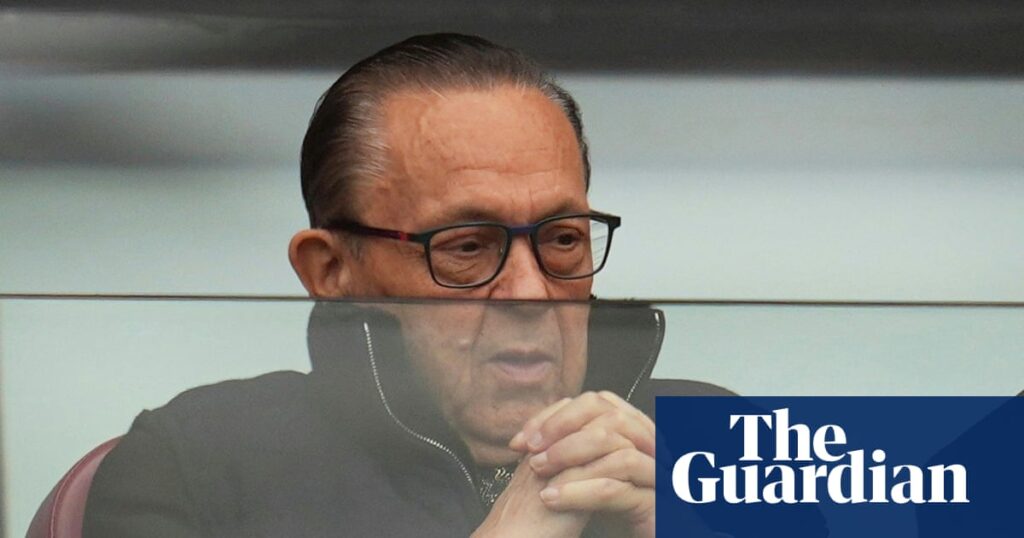
The resignation of David Sullivan from West Ham United marks the end of an extraordinary chapter in English football’s relationship with controversial ownership. Sullivan’s decision to step down to fight claims about his private life has reignited questions about how a businessman who built his fortune through the adult entertainment industry came to control one of the Premier League’s most storied institutions. From a Cardiff council estate to the corridors of power at the London Stadium, Sullivan’s journey through football has been defined by resistance, transformation and ultimately, scrutiny that would prove impossible to escape.
Player Profile
David Sullivan, now 75, was born in Wales and harboured childhood ambitions of becoming a professional footballer. Those dreams were curtailed by his physical limitations – short in stature and lacking the athletic gifts required for the professional game. However, Sullivan possessed a different kind of drive: an entrepreneurial ruthlessness that would see him build a multi-million pound empire. Beginning in the 1970s, Sullivan established himself in the pornography publishing industry, launching titles including the Sunday Sport newspaper. By the 1980s and 1990s, his business interests had expanded into property development, accumulating wealth estimated in the hundreds of millions. His transition into football ownership began in the early 1990s, initially attempting to gain influence at Birmingham City before eventually securing control alongside the Gold family. Sullivan’s business acumen was undeniable, but his background in adult entertainment made him a polarising figure who struggled for acceptance within football’s establishment.
Club Analysis
West Ham United initially rebuffed Sullivan and his partners when they purchased a minority stake in 1991, with the existing board refusing boardroom access to the businessmen. The club’s traditional hierarchy viewed their backgrounds as incompatible with West Ham’s family-oriented East End values. However, financial pressures eventually forced a change. By 2010, West Ham faced potential administration, and Sullivan, alongside David Gold, acquired the club for approximately £105 million, taking joint control with a 50% stake each. Their tenure has been marked by significant infrastructure changes – most notably the controversial move from the Boleyn Ground to the London Stadium in 2016 – and fluctuating on-field fortunes. West Ham have established themselves as a mid-table Premier League side with occasional European ambitions, finishing sixth in 2022-23 and winning the Europa Conference League that same season. Sullivan’s ownership model focused on financial sustainability rather than owner investment, often frustrating supporters who witnessed rivals bankrolled by wealthier benefactors. The club’s ambitions under Sullivan remained modest by modern standards: Premier League survival first, European qualification as aspiration.
Transfer Breakdown
Sullivan’s departure represents a complete severance from West Ham United rather than a traditional transfer of shares. Reports suggest he is stepping down from all operational and ownership roles to address personal legal matters regarding historical conduct allegations. The timeline for a complete sale of his shareholding remains unclear, though Czech billionaire Daniel Křetínský, who already owns a 27% stake in the club, is widely considered the most likely successor. Křetínský has been gradually increasing his investment since 2021 and possesses the financial resources to assume full control. The valuation of Sullivan’s stake could reach £300-400 million based on current Premier League club valuations, though the circumstances of his departure may affect negotiations. This situation has moved beyond rumour to confirmed reality – Sullivan’s resignation is a done deal, whilst the transfer of his shares remains in advanced discussions. No competing bidders have emerged publicly, suggesting Křetínský’s path to majority ownership faces little opposition.
What This Means
Sullivan’s exit raises profound questions about football governance and the sport’s historical willingness to embrace controversial wealth. For decades, English football has operated with minimal ownership scrutiny, allowing individuals from morally questionable business backgrounds to purchase clubs provided they possessed sufficient capital. Sullivan’s career trajectory – from adult publishing magnate to Premier League power broker – exemplifies this permissive approach. West Ham supporters have offered mixed reactions; whilst many celebrate the potential end of the Sullivan-Gold era, which they viewed as characterised by broken promises and limited ambition, others acknowledge the ownership’s role in stabilising the club financially during turbulent periods. The broader Premier League landscape may view this as further evidence that football’s traditional ownership models are being replaced by international investors with diversified portfolios. Sullivan’s departure, under these specific circumstances, also serves as a cautionary tale about how past conduct can eventually resurface, regardless of attempts at legitimisation through sports ownership. For West Ham, this represents an opportunity for reinvention under Křetínský, whose comparatively low profile and substantial resources offer hope for a new chapter. The Sullivan era will be remembered as transformative yet divisive – a period when football’s gates opened to wealth from unconventional sources, with all the complications that entailed.